Creating New Local Cache
This page explains how to create a Local Cache and a Local Pub/Sub Messaging Cache using the NCache Management Center or PowerShell. An InProc Local Cache can also be created and initialized directly from the application through application configuration or the NCache API.
Prerequisites
Make sure the NCache Service is started. If it is not, do the following:
- For .NET, type the following command in PowerShell (run as admin):
Start-Service -Name NCacheSvc
- For .NET Core, make sure that you run the NCache Service as an administrator. Here are the steps to do so:
- Open the Services window and look for NCache in the list.
- Right click on NCacheSvc from the list and choose Properties.
- Go to the Log On tab and click on the Browse button.
- In the object name field, type Administrator and click on the Check Names button.
- It will pick the appropriate Administrator, then click OK.
- Now, set a Password and click OK.
- Right click on the NCache Service and choose the Restart option. Now your service will start running as administrator.
Important
When creating an OutProc Local Cache, if all ports in the configured management port range are occupied, cache creation fails and NCache displays an error indicating that a custom management port is required. The NCache Service remains responsive.In this case, manually add the cache configuration to config.ncconf and assign the required management port to the same cache in ports.xml. For details about management ports, see Cache Server Ports.
Using the NCache Management Center
Launch the NCache Management Center by browsing to http://localhost:9801 or
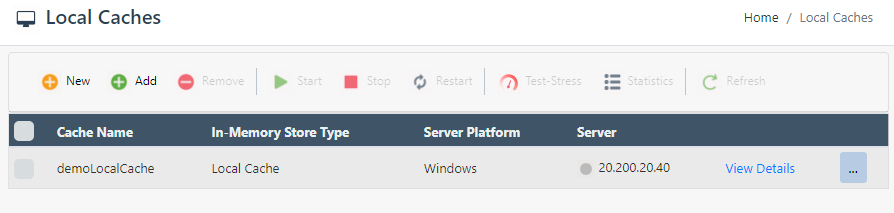
<server-ip>:9801.In the left navigation bar, click on Local Caches. This opens up the Local Caches page. It shows any existing local caches on your machine and additional details like Server and Server Platform.
To create a new local cache, click on New.
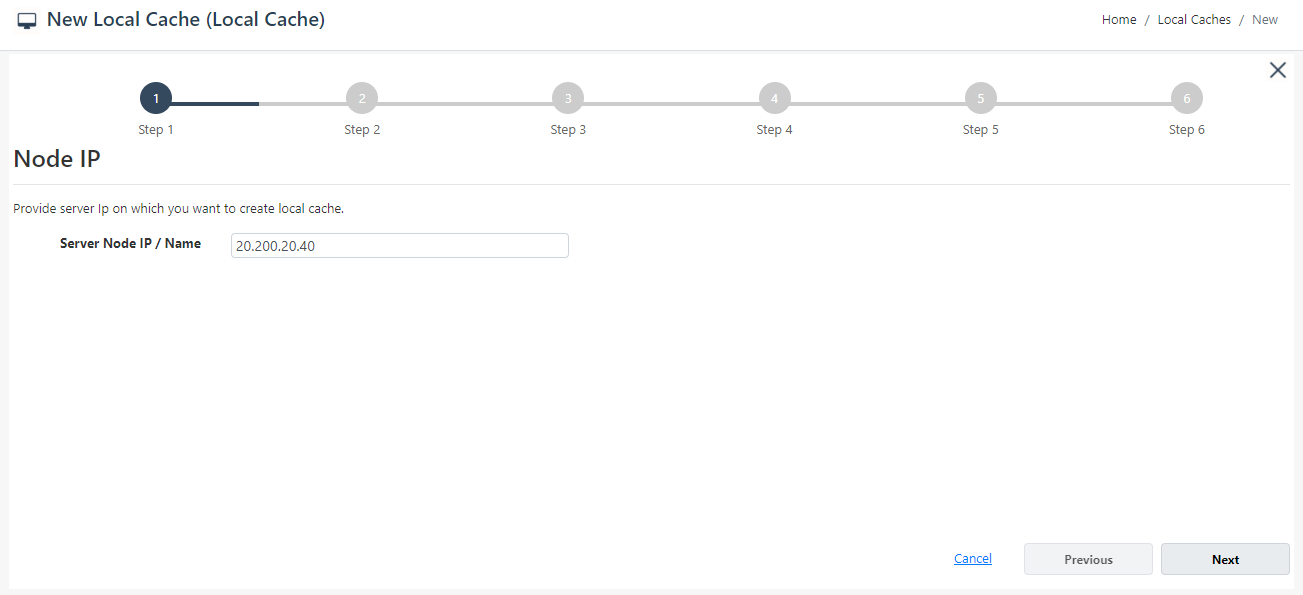
- Specify the Server Node IP / Name and click Next.
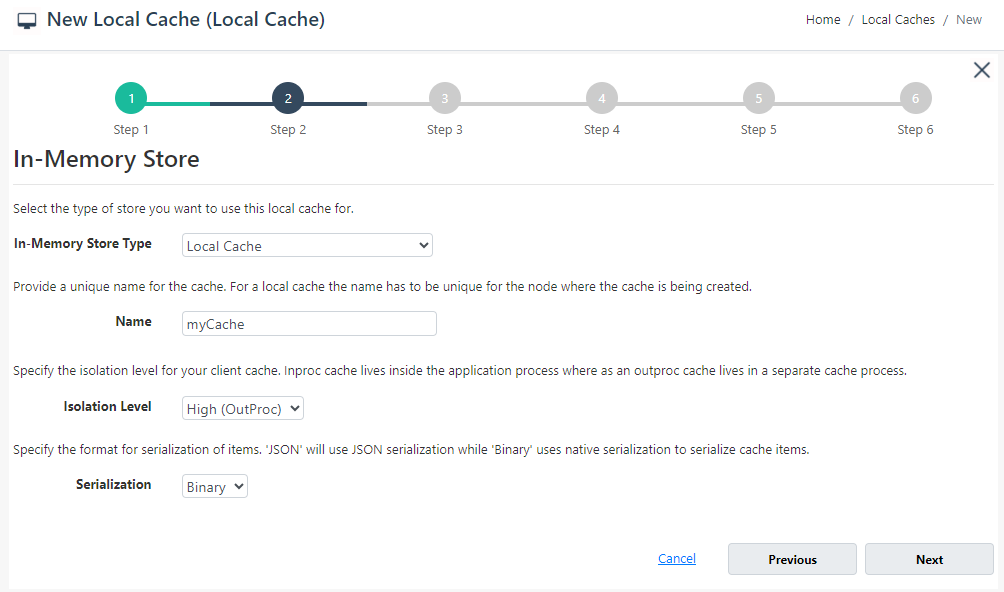
- Specify the In-Memory Store Type as Local Cache from the dropdown menu. Afterwards, specify the Name and Isolation Level. Click Next.
Warning
If a cache already exists against the Name specified, you are prompted with an error message.
Note
If you select Pub/Sub Messaging, follow the same configuration steps as Local Cache.
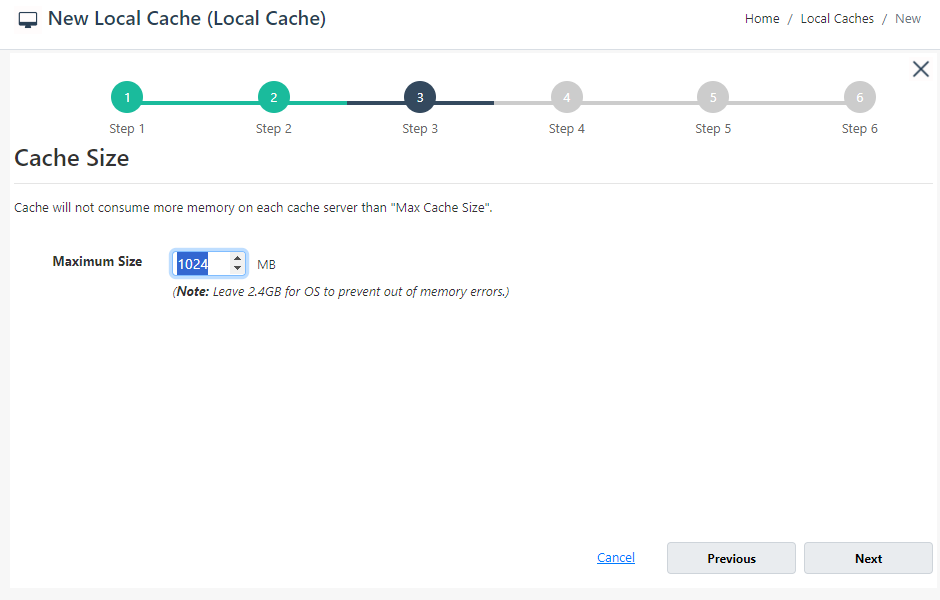
- Change the Cache Size if required, and click Next.
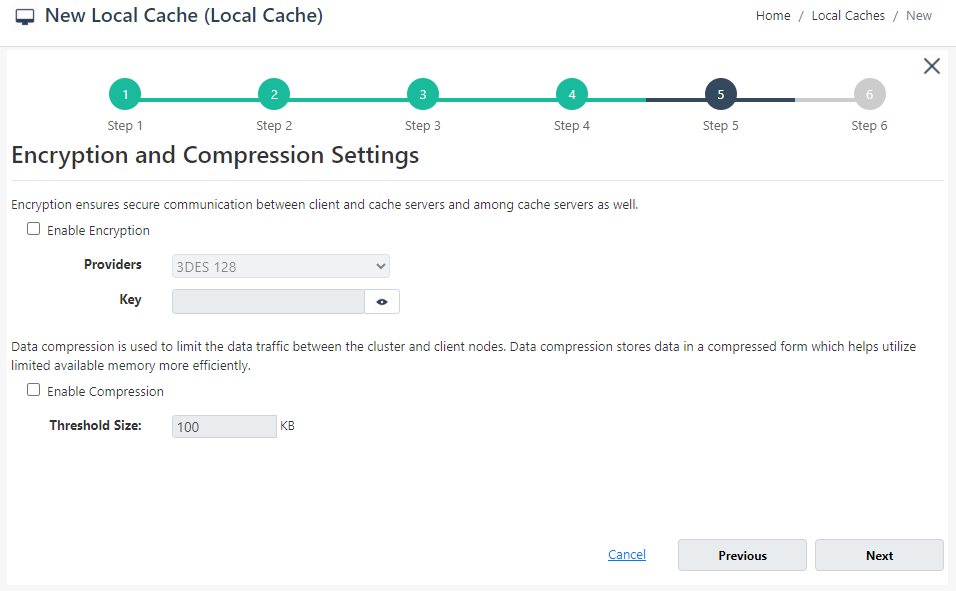
- If you want to enable encryption and compression, check the Enable Encryption and Enable Compression checkboxes. If enabled, set the Providers and Key for encryption and Threshold Size for compression. Click Next.
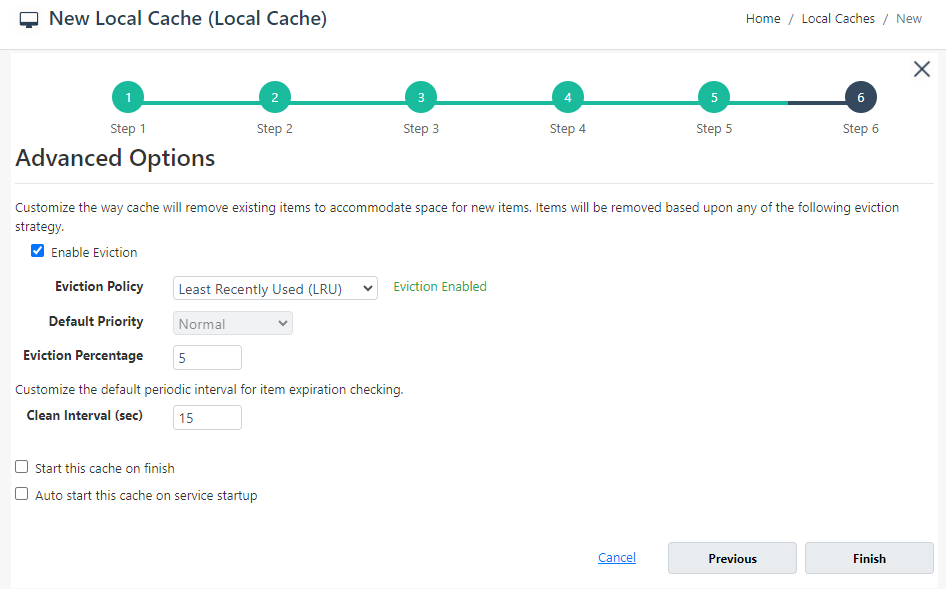
On Advanced Options page, you can configure the following settings:
Eviction is enabled by default. You can configure the Eviction Policy accordingly. If you want to disable eviction, unselect the checkbox Enable Eviction.
You can also change the Eviction percentage; items will be evicted from the cache using this percentage value if eviction is enabled.
You can change the Clean interval value. The default value is 15 seconds.
This cache can be started automatically upon the completion of this process if you have selected the Start this cache on finish checkbox on this dialog box.
You can make the cache start automatically after service restart by selecting the Auto start this cache on service startup checkbox.
- Click Finish. The created cache will appear on the Local Caches page, and a success notification will be received in the notification panel.
Note
You can also initialize a Local Cache as InProc directly from your application using the NCache API. For details, see How to Initialize an InProc Local Cache.
Using PowerShell
You can use PowerShell to manage local caches by using the NCache supported cmdlets. The New Cache cmdlet enables the user to create a new cache on one or more server nodes as demonstrated below.
Local Cache
- This command creates a new local cache named defaultCache on server 20.200.20.11 with size 1024 MB and uses Local topology since no topology is specified.
New-Cache -Name defaultCache -Server 20.200.20.11 `
          -Size 1024
- This command creates a new local cache named defaultCache on server 20.200.20.11 having the size of 1024 MB, with the configuration that exists on the specified path.
New-Cache -Name defaultCache -Server 20.200.20.11 `
          -Path C:\config.xml
- This command creates a 1024 MB new local cache named defaultCache on server 20.200.20.11 with an eviction policy set to priority and the default priority set as high. Additionally, with an eviction ratio set to 10% and cache cleanup interval of 20 seconds.
New-Cache -Name defaultCache -Server 20.200.20.11 `
          -Size 1024 -EvictionPolicy priority `
          -DefaultPriority high -EvictionRatio 10 `
          -CleanupInterval 20
- This command creates a new local cache named defaultCache on server 20.200.20.11 with size 1024 MB using mutual TLS (mTLS). It runs from a machine where NCache is not installed and uses
C:\certs\client.pemto authenticate the machine running the cmdlet. The-TlsCertPasswordparameter decrypts the certificate's password-protected private key. Omit this parameter if the private key is not encrypted.
New-Cache -Name defaultCache -Server 20.200.20.11 `
          -Size 1024 `
          -TlsCertPath "C:\certs\client.pem" -TlsCertPassword "clientKeyPassword"
- This command creates a new local cache named defaultCache on server 20.200.20.11 with size 1024 MB using security credentials.
New-Cache -Name defaultCache -Server 20.200.20.11 `
          -Size 1024 -Credentials(Get-Credential john_smith)
Local Pub/Sub Messaging Cache
- This command creates a cache called defaultCache of Local topology with a size of 1024MB and InMemoryStoreType specified as PubSubMessaging on the node 20.200.20.11 using cluster port 9881.
New-Cache -Name defaultCache -Topology Local `
          -InMemoryStoreType PubSubMessaging -Server 20.200.20.11 `
          -Size 1024 -ClusterPort 9881
- This command creates a cache called defaultCache of Local topology,
InMemoryStoreTypespecified as PubSubMessaging with the configuration that exists on the path on node 20.200.20.11 using cluster port 9881.
New-Cache -Name defaultCache -Topology Local `
          -InMemoryStoreType PubSubMessaging -Server 20.200.20.11 `
          -Size 1024 -Path C:\config.xml `
          -ClusterPort 9881
- This command creates a cache named defaultCache with Local topology on the specified server and configures Pub/Sub messaging as the
InMemoryStoreType. The cache size is set to 1024 MB with a priority-based eviction policy, high as the default item priority, an eviction ratio of 10%, and a cleanup interval of 20 seconds.
New-Cache -Name defaultCache -Topology Local `
          -InMemoryStoreType PubSubMessaging -Server 20.200.20.11 `
          -Size 1024 -EvictionPolicy priority `
          -DefaultPriority high -EvictionRatio 10 `
          -CleanupInterval 20
Creating an InProc Local Cache from the Application
An InProc Local Cache can be created and initialized directly from the client application. You can specify the InProc isolation level either through application configuration or programmatically through the API.
Using Application Configuration
To configure an InProc Local Cache, set the inproc property to true in the application's configuration file (appsettings.json, app.config, or web.config). This allows the Local Cache to run within the application process.
The following example demonstrates how to enable an InProc Local Cache using app.config:
{
  "ncache": {
    "inproc-cache": {
      "inproc": true
    }
  }
}
Note
You can also initialize a Local Cache as InProc programmatically using the NCache API. For details, see Initialize an InProc Local Cache Using API.
See Also
Add Existing Cache
Create Clustered Cache
Remove Cache
Clear Cache
