Create Bridge
To configure a Bridge for WAN Replication or disaster recovery with your clustered NCache caches, follow the steps outlined in this section using the NCache Management Center and PowerShell.
Important
Before proceeding, make sure that the NCache Bridge Service is running.
Using the NCache Management Center
Launch the NCache Management Center by browsing to http://localhost:9801 or
<server-ip>:9801.Click on the
 button on the left navigation bar on the index page.
This opens up a page containing a list of Bridges along with their cache names and Bridge nodes. Click the
 button to create a new Bridge.
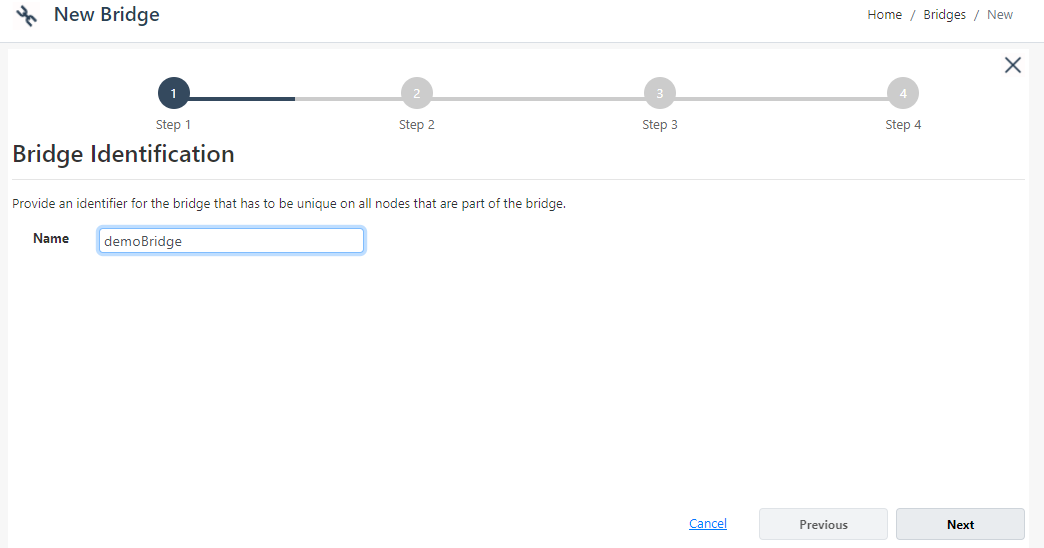
The New Bridge page opens up, displaying the first step to specify Bridge Identification in order to create the new Bridge. Enter the new Name and click Next.
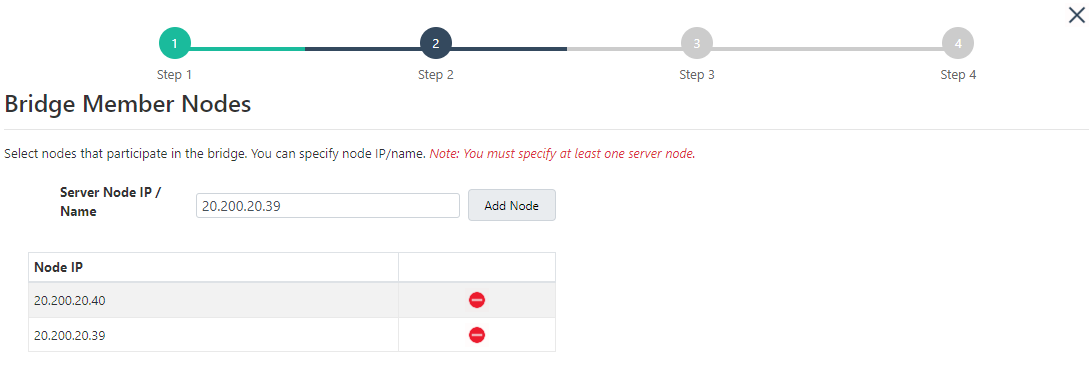
- A new page opens asking the user to specify the Bridge Member Nodes. Enter the Server Node IP and click Next.
- Specify Bridge Port and Queues that appear on the newly opened web page displaying Bridge Port, Maximum Queue Size, Replicator Queue Size, and Enable Queue Optimization checkbox.
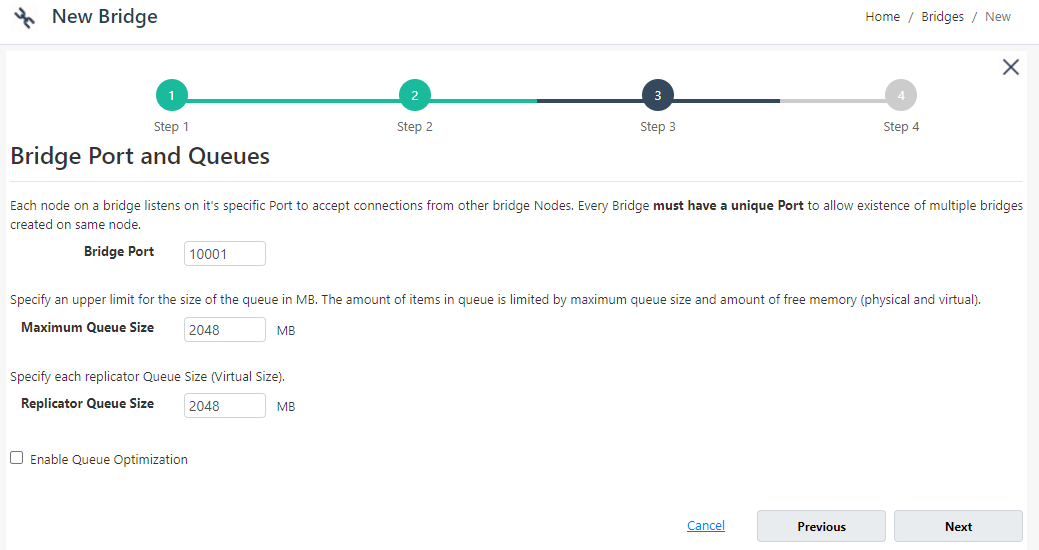
Enter the required information and click Next.
Specify Queue Replication Interval and Connection Retry Interval on the new Target Cache Options page and click Finish.
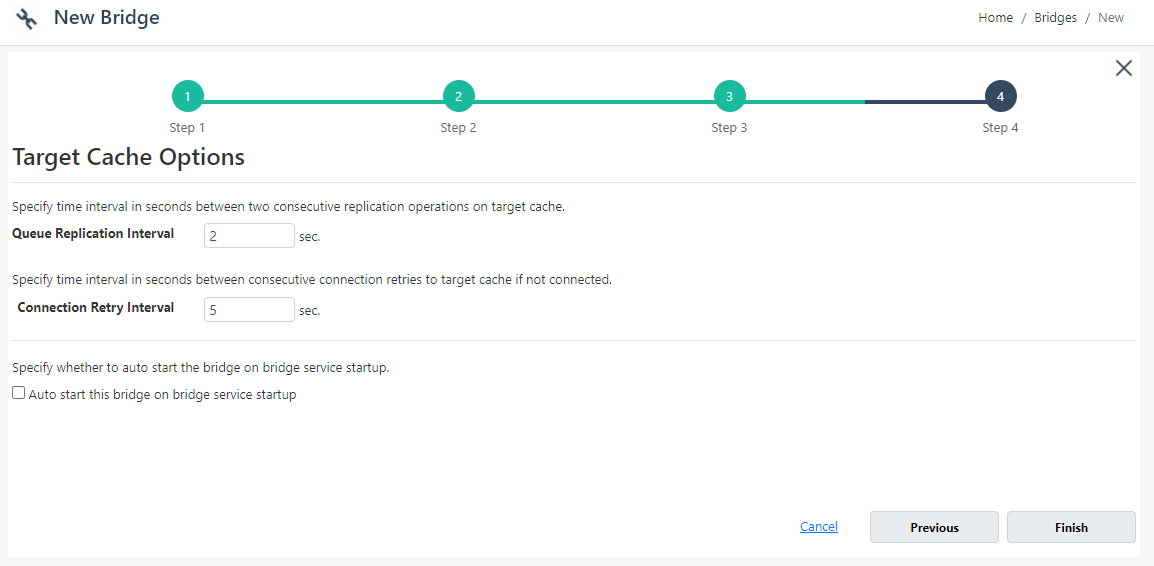
- A new Bridge will be successfully created and displayed in the Bridge list like the following.

Using PowerShell
The New-Bridge cmdlet enables the users to create a new Bridge on one or more than one cache server nodes.
- The following command creates a new Bridge named defaultBridge on server 20.200.20.11.
New-Bridge -Name defaultBridge -Server 20.200.20.11
- The following command creates a new Bridge named defaultBridge on server 20.200.20.11 using Port 9817.
New-Bridge -Name defaultBridge -Server 20.200.20.11 `
           -Port 9817
- The following creates a new Bridge defaultBridge on servers 20.200.20.11 (active mode) and 20.200.20.12 (passive mode) using the default Bridge Port 9816 with default
MaxQueueSize.
New-Bridge -Name defaultBridge -Server "20.200.20.11,20.200.20.12" `
           -BridgePort 9816 -MaxQueueSize 2048
- This command creates a new Bridge defaultBridge on servers 20.200.20.11 (active mode) and 20.200.20.12 (passive mode) with a replicator queue size of 100 MB.
New-Bridge -Name defaultBridge -Server "20.200.20.11,20.200.20.12" `
           -ReplicatorQueueSize 100
- The following command creates a new Bridge named defaultBridge on server 20.200.20.11 and sets the queue replication interval to 2 seconds.
New-Bridge -Name defaultBridge -Server 20.200.20.11 `
           -QueueReplicationInterval 2
- The following command creates a new Bridge named defaultBridge on server 20.200.20.11 with the
-QueueOptimizedswitch enabled.
New-Bridge -Name defaultBridge -Server 20.200.20.11 `
           -QueueOptimized
- The following command creates a new Bridge named defaultBridge on server 20.200.20.11 with
-ConnectionRetryIntervalset to 5 seconds.
New-Bridge -Name defaultBridge -Server 20.200.20.11 `
           -ConnectionRetryInterval 5
- This command creates defaultBridge on the specified server with mutual TLS (mTLS) enabled. It runs from a machine where NCache is not installed and uses
C:\certs\client.pemto authenticate the machine running the cmdlet. The-TlsCertPasswordparameter decrypts the certificate’s password-protected private key. Omit this parameter if the private key is not encrypted.
New-Bridge -Name defaultBridge -Server 20.200.20.11 `
           -TlsCertPath "C:\certs\client.pem" -TlsCertPassword "clientKeyPassword"
- The following command creates a new Bridge named defaultBridge on server 20.200.20.11 using security credentials.
New-Bridge -Name defaultBridge -Server 20.200.20.11 `
           -Credentials(Get-Credential john_smith)
See Also
Add Clustered Caches to Bridge
Configure Conflict Resolver
Change Cache Synchronization Modes
Remove Cache from Bridge
