Configurations
NCache Management Center provides multiple configuration and management pages for creating, configuring, monitoring, and managing caches and bridge caches. These pages expose different configuration options related to cache topology, storage, monitoring, bridge replication, security, and runtime behavior.
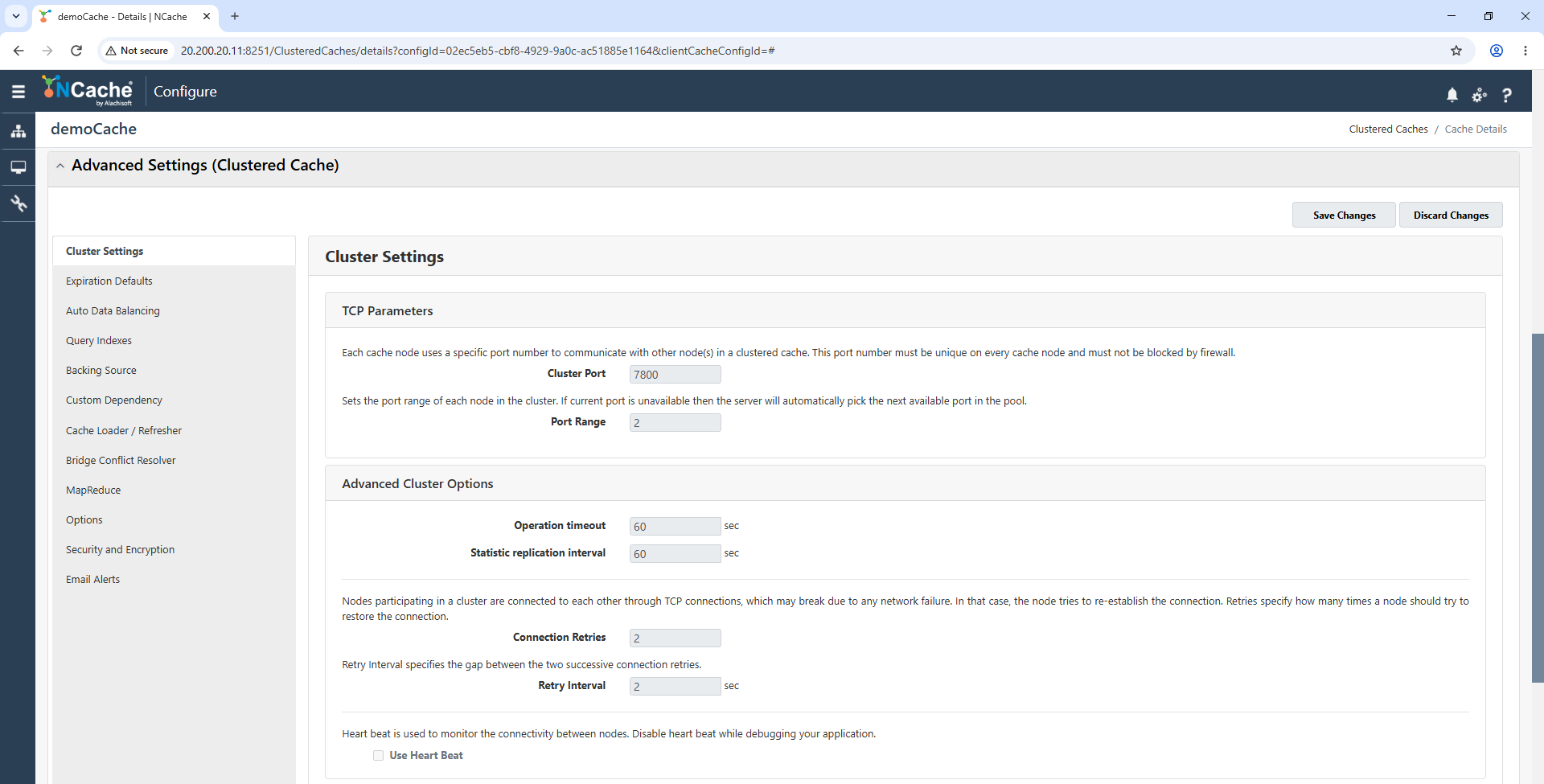
For advanced cache configuration options, refer to the Advanced Settings section of the relevant cache configuration page.
In This Section
Clustered Caches
The Clustered Caches page lists all clustered caches configured on the machine and provides options to create, manage, monitor, and configure clustered caches.
New Clustered Cache
The New Clustered Cache wizard provides a step-by-step interface for creating and configuring clustered caches, including topology selection, cluster settings, security, and advanced options.
Clustered Cache Configuration
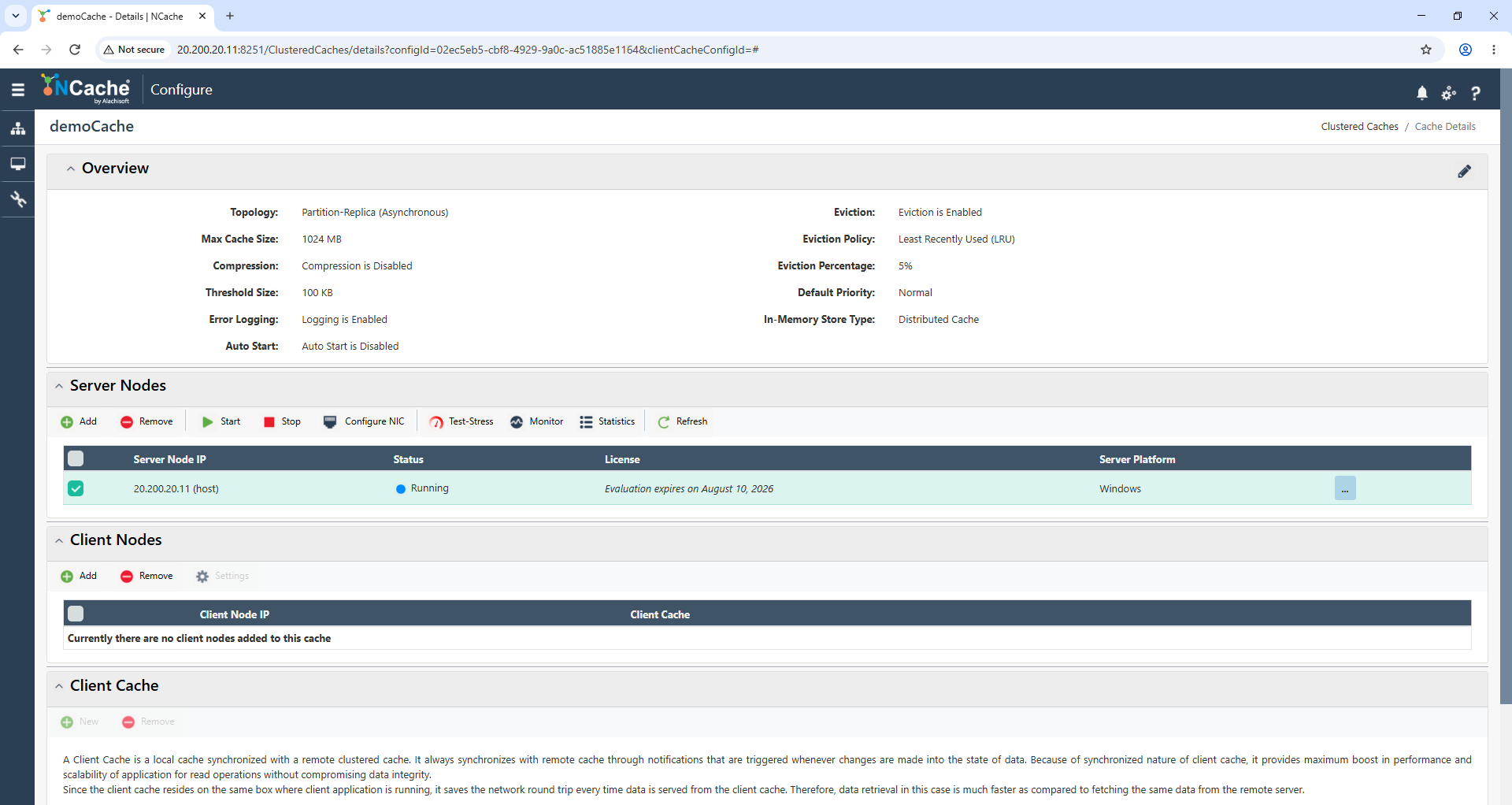
The Clustered Cache Configuration page displays detailed configuration settings for a selected clustered cache, including server nodes, client nodes, advanced settings, security, and serialization options.
Local Caches
The Local Caches page lists all configured local caches and provides options to create, manage, monitor, and configure local caches.
New Local Cache
The New Local Cache wizard provides a multi-step interface for creating and configuring local caches, including cache size, security, and advanced settings.
Local Cache Configuration
The Local Cache Configuration page displays detailed configuration settings for a selected local cache, including policies, backing source, serialization, security, and notifications.
Bridges
The Bridges page lists all configured bridge caches and provides options to create, manage, monitor, and configure bridges.
New Bridge
The New Bridge wizard provides step-by-step configuration of bridge caches, including bridge nodes, queue settings, ports, and replication options.
Bridge Configuration
The Bridge Configuration page displays detailed settings for selected bridges, including bridge caches, bridge nodes, queue management, retry intervals, and performance counters.
