
NCache is an open-source, in-memory distributed cache that accelerates the performance of .NET and Java applications by caching frequently accessed data, ensuring fast transactional speeds and linear scalability. Its distributed architecture allows seamless scaling by adding more nodes, automatically balancing the load, and providing consistent performance as traffic and data volume increases. Unlike other caching solutions built on C++ or Linux, NCache is specifically designed for .NET environments, offering seamless integration. Being a market leader for almost 2 decades, NCache enables developers to build high-performing, reliable systems that easily handle mission-critical workloads. This blog will discuss how NCache can transform your applications into high-performing, scalable systems.
Key Takeaways
Linear Scalability: Unlike traditional databases that hit a “performance wall,” NCache allows you to scale horizontally by adding more server nodes to a live cluster, ensuring performance grows linearly with your infrastructure.
80–90% Database Offloading: By serving frequently accessed data from an in-memory caching tier, NCache removes the bottleneck from your backend SQL or NoSQL databases, preventing crashes during high-traffic spikes.
Native .NET Optimization: Engineered specifically for the Microsoft ecosystem, NCache provides high-speed, direct integration for ASP.NET Core, Entity Framework Core, and SignalR that non-native (C++ or Linux-based) caches cannot match.
In-Process “Client Cache” Speed: It offers a unique Near Cache feature that stores data directly on the application server’s memory. This delivers InProc speed, eliminating network latency for the most active data while staying synchronized with the main cluster.
Multi-Region Disaster Recovery: Through WAN Replication, NCache supports Active-Passive and Active-Active topographies. This ensures your data is synchronized across different Azure/AWS regions or global data centers to maintain 100% uptime.
Which .NET Applications Need NCache?
NCache empowers applications to handle high traffic, ensure faster data access, and scale effortlessly as demands grow. You can integrate NCache in the following high-transaction applications.
- Web Applications (.NET/.NET Core)
- Web Services Applications (.NET/.NET Core)
- Micro-services Applications (.NET/.NET Core)
- Server Applications (.NET/.NET Core)
Use Case Comparison: Solving Common Scalability Challenges
| Use Case | Technical Challenge | NCache Solution |
|---|---|---|
| E-Commerce | Sudden high traffic during flash sales | Distributed Session Caching |
| Real-time Chat | Message latency and server synchronization | SignalR Backplane |
| Microservices | Complex inter-service data sharing | Pub/Sub Messaging |
| Legacy Apps | Hard-to-scale database bottlenecks | SQL-based Caching |
NCache As a Solution
Modern applications must deliver high performance and achieve scalability to handle increasing workloads. Without a robust caching solution, your application may experience delays and downtime since all application requests go to the backend database, which is not designed to scale seamlessly. This creates performance bottlenecks, chokes the database under high transaction loads, and risks a single point of failure.
NCache, as an in-memory cache, reduces database load by caching frequently accessed data. In production environments, NCache is capable of handling millions of requests per second with sub-millisecond latency, making it the industry standard for .NET scalability. Its distributed architecture pools memory and CPU across multiple servers, ensuring seamless scalability and high availability under heavy transaction loads as discussed below.
- Handling Extreme Transaction Loads: During peak traffic, applications risk degraded performance and downtime as all data requests hit the database. NCache addresses this by reducing database queries by 80–90%, preventing bottlenecks, and ensuring uninterrupted service during high traffic or database issues.
- Supporting Customer-Facing Websites: For businesses relying on online platforms, performance and availability are non-negotiable. Such as e-commerce stores need to handle high traffic during sales; airlines need to process ticket reservations efficiently; and gaming platforms need to deliver real-time updates without delay. To overcome these challenges, such businesses can use a reliable caching solution like NCache that provides them with high availability, data reliability along with high performance.
- Background Processing Businesses: Industries like banking, logistics, and utilities depend on real-time data for tasks such as fraud detection and device monitoring. NCache’s robust Pub/Sub and event management capabilities efficiently synchronize workflows, ensuring reliability for critical operations.
NCache vs. Traditional Database Comparison
| Feature | Traditional Database | NCache (Distributed Cache) |
|---|---|---|
| Storage | Disk-based (Slower) | In-memory (Fast) |
| Scalability | Vertical (Limited) | Horizontal (Linear) |
| Latency | Milliseconds | Microseconds |
| Throughput | Limited by Disk I/O | Scales with Cluster Nodes |
| Architecture | Centralized | Peer-to-Peer Distributed |
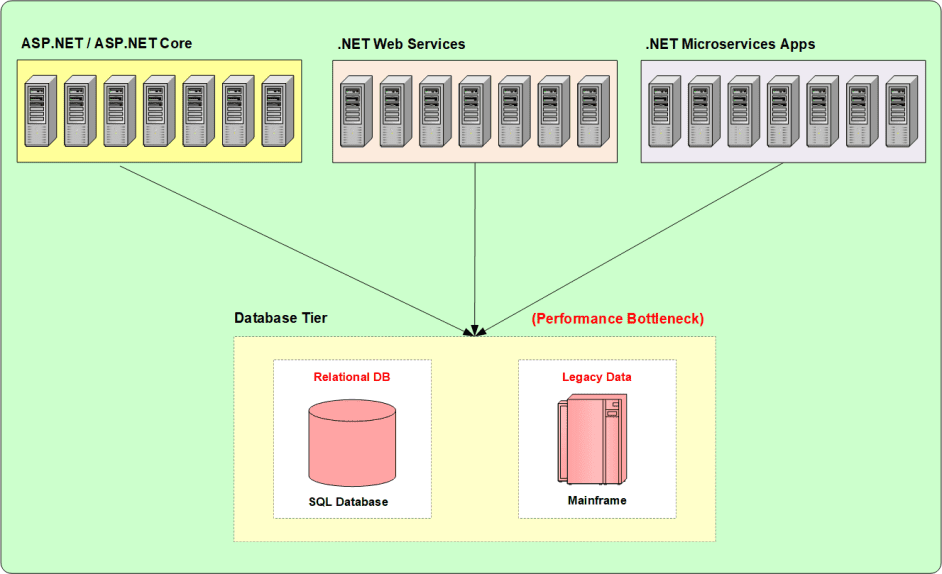
Figure 1: Traditional SQL Database Bottleneck When Scaling ASP.NET Applications
Figure 1: Traditional SQL Database Bottleneck When Scaling ASP.NET Applications
Such businesses can’t afford to have their applications slow down during peak times. Without a caching solution like NCache, the impact can be severe—lost revenue, frustrated customers, and reputational damage. NCache ensures fast, scalable performance, preventing bottlenecks and maintaining smooth operations even under heavy loads.
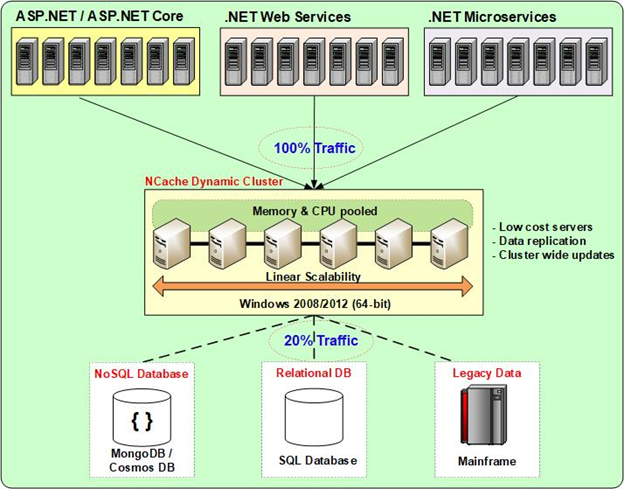
Figure 2: Linear Scalability and 80% Database Load Reduction with NCache Distributed Caching
Key Features of NCache
Let’s explore some of the key features that NCache offers.
Keep Cache Fresh
NCache provides several methods to keep your cache data fresh without any manual intervention. For instance, Absolute and Sliding Expirations automatically remove expired data from the cache and keep it up-to-date. Another way to keep your cache updated is through Dependencies which remove outdated data whenever changes occur in the database, keeping your cache updated and aligned with the latest information.
SQL Searching
For large datasets, NCache offers powerful search capabilities, allowing you to quickly search data based on object attributes, Groups, Tags, or Named Tags. You can perform searches using SQL or LINQ queries to access data quickly. NCache further optimizes search performance by automatically creating indexes, significantly reducing search times even in large-scale applications.
Server-side Code
NCache is the only .NET solution offering server-side code capabilities. With Read-through, your cache can automatically fetch data from the database ensuring that your cache is always up-to-date. Write-through updates the database directly from the cache, while Write-behind updates the database asynchronously, ensuring your application remains responsive without waiting for database responses. Additionally, the Cache Loader pre-loads the cache when the application starts,
Client Cache (InProc Speed)
NCache offers a unique Client Cache feature, also known as Near Cache, which delivers in-process (InProc) performance. It works as temporary storage that resides near the application process for fast data retrieval. While staying fully synchronized with the main caching tier, it ensures real-time updates from other applications or users. As a result, your application becomes more efficient and responsive, without needing constant access to the central cache or database.
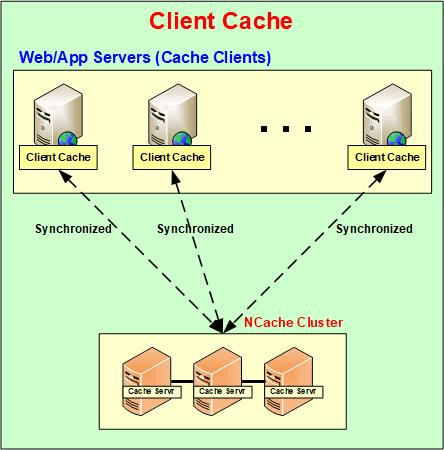
Figure 3: NCache Client Cache (Near Cache) Architecture for In-Process Speed and Real-Time Synchronization
To learn more about Client Cache and its working, please refer to this blog.
WAN Replication of Cache
NCache enables seamless cache replication across multiple data centers, Azure regions, or AWS availability zones without affecting application performance through its WAN Replication feature. It supports both Active-Passive and Active-Active configurations, ensuring high availability, fault tolerance, and load balancing. As such, this feature synchronizes your cache across distributed environments, ensuring data consistency and peak performance across all locations.
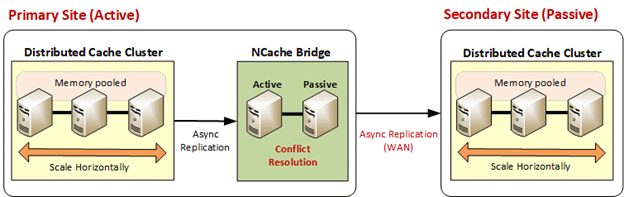
Figure 4: NCache WAN Replication for Multi-Site Active-Passive Disaster Recovery
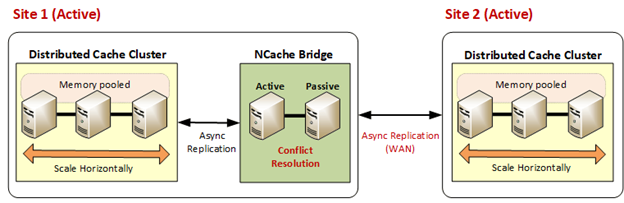
Figure 5: NCache Active-Active WAN Replication for Multi-Region High Availability
Deployment Options with NCache
NCache is a native in-memory .NET and .NET Core caching solution offering tailored client and server features, seamless deployment across on-premises, cloud, and Docker, and optimized performance for modern applications. Here’s an overview of how NCache integrates with each framework and platform:
NCache Client Support
NCache provides a cache client with full support for both .NET and .NET Core as follows:
.NET Framework:
- Full support for Entity Framework 6 and NHibernate Cache to accelerate database operations.
- Optimized for NET Sessions, View State, and Output Cache to enhance web application performance.
- NET SignalR support to boost real-time communication capabilities.
.NET Core:
- Seamless caching with EF Core Cache for improved database interaction.
- High performance for NET Core Sessions, Response Cache, and IDistributedCache to reduce latency.
- Full support for NET Core SignalR for fast, real-time messaging applications.
NCache Server Support
The NCache server, like its client, is full.NET/.NET Core based—unmatched by competitors that rely on C++ or Linux. Moreover, this unique compatibility ensures seamless support for both .NET and .NET Core environments as discussed below:
.NET Framework:
- Server-side code capabilities for custom business logic implementation.
.NET Core:
- Server-side code support for .NET Core applications.
- Platform compatibility with Windows Server and Linux to suit diverse deployment needs.
Flexible Deployment Options
NCache is designed to meet modern infrastructure needs with the following deployment options:
- Windows Server and Linux
- For on-premises environments.
- Cloud Deployments
- Available as a Virtual Machine (VM) in Azure and AWS marketplaces.
- Offered as a Managed Cache Cloud Service Cluster via NCache’s Cloud Portal for hassle-free cloud management.
- Docker Containers
- Pre-configured NCache images available on Docker Hub.
- Ability to create custom NCache Docker images using Dockerfiles for tailored solutions.
With such flexible deployment options, NCache ensures seamless scalability, high availability, and optimized in-memory caching for all application environments.
Conclusion
NCache is the go-to in-memory caching solution for .NET and .NET Core-based applications, delivering exceptional performance, scalability, and flexibility. With seamless integration, powerful features, and versatile deployment options, it empowers your applications to handle high traffic, reduce latency, and scale effortlessly. Ready to boost your application’s performance? Download NCache today!
Frequently Asked Questions (FAQ)
Q: How does NCache handle data that is too large for a single server?
A: NCache utilizes a Distributed Architecture that pools the RAM and CPU of multiple servers into a single logical capacity. This allows you to store datasets far larger than any individual server’s memory limits by distributing the data across the entire cluster.
Q: What happens to the cache when the underlying SQL data changes?
A: NCache maintains “Data Freshness” through Database Dependencies. You can configure the cache to automatically invalidate or remove specific items whenever a corresponding change occurs in the database, ensuring your application never serves stale information.
Q: How does NCache stay synchronized across different geographic regions?
A: Through its Bridge-based WAN Replication, NCache synchronizes data asynchronously between sites. It includes built-in Conflict Resolution logic to handle scenarios where the same data might be updated simultaneously in two different “Active” data centers.
Q: Can NCache be used for microservices running in containers?
A: Yes, NCache is built for modern infrastructure and provides pre-configured Docker images and full support for Kubernetes orchestration. This allows it to scale dynamically alongside your microservices in cloud environments like Azure (AKS) or AWS (EKS).
Q: Does NCache require code changes to keep the cache updated?
A: No, you can implement Server-side Code like Read-through and Write-through providers. These allow the cache itself to communicate with the database, so your application only has to interact with the cache, simplifying your client-side logic.